

Understanding Barbed Wire Mesh Fence
Views:118Publish Time: 2026-09-11
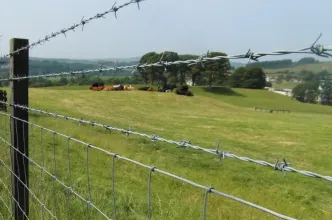
When it comes to securing sensitive areas such as airports, highway bridges, and schools, a formidable defense is essential. Enter the barbed wire mesh fence, a sophisticated security solution that combines metal wire mesh with barbed wire to create a robust protective structure. This dual approach offers not only physical deterrence but also psychological intimidation to potential intruders.
Structure of Barbed Wire Mesh Fence
At the heart of the barbed wire mesh fence are two integral components. The bottom section is composed of durable metal wire mesh, providing the foundational isolation necessary for any secure perimeter. Meanwhile, the upper portion is fortified with barbed wire, which enhances its deterrent capabilities. Typically, the metal wire mesh undergoes galvanization or plastic coating to ensure longevity and resistance to corrosion, while barbed wire can be arranged in a spiral or blade-like fashion.
This effective combination guarantees transparency for visibility while actively preventing climbing and vandalism. Depending on specific usage environments and required security levels, barbed wire mesh fences are categorized into various types:
1. Crash-Resistant Corrosion-Resistant Type: Ideal for high-traffic areas like airports that need to withstand significant impact.
2. Hot-Dip Galvanized Type: Best suited for humid or coastal regions, offering superior rust resistance.
3. Plastic Coated Type: Commonly found in schools and residential areas, showcasing a tidier appearance and minimizing the risk of cuts.
When selecting a barbed wire mesh fence, it’s crucial to consider three primary dimensions: the level of environmental corrosion, the required security rating, and aesthetic appeal. Each factor plays a vital role in determining the best type of fence for any given application.
In practice, evaluating the security level of the location and environmental conditions is essential when choosing a barbed wire mesh fence. Different types vary in their protective strength and durability, tailoring to specific needs. By understanding the particulars of each fence type, you can ensure optimal safety and resilience for your designated area.
Lastes NewsBack to list

Understanding Green Diamond-Mesh Fencing: Structure and Applications
Understanding green diamond-mesh fencing: structure and applications.
Understanding the Cost Estimation for Wire Mesh Fencing
Understanding the cost estimation for wire mesh fencing.

Join ADTO Group at The 140th Canton Fair: An Invitation to Innovate and Connect
Join ADTO Group at The 140th Canton Fair: An Invitation to Innovate and Connect.
Definition and Structural Characteristics of Double-Wire Mesh Fencing
Definition and structural characteristics of double-wire mesh fencing.
Understanding Barbed Wire Mesh Fence
Understanding barbed wire mesh fence.

Advantages of Using a Garden Fence
Advantages of using a garden fence.